Cherry Delight

Vietnam was the living room war, the first time that battle and violence were on live network television. There was less censorship than in previous wars, too, and so much of what the American people saw was very grim – burned corpses, bombed-out buildings, and little girls torched with napalm. American involvement in Vietnam deepened in 1965, the year that I moved to Ann Arbor as a three-year-old, and most of the war’s American battle deaths occurred in ensuing six years. There were of course movements, songs, and rallies against the draft and against another of what seemed at the time like an endless sequence of ghastly wars. My father voted for Richard Nixon in 1968 because he thought that a Republican would find it easier to end the war, but Nixon let the war continue through and past his term. Dad never voted for a Republican again though, ironically, he later came to know and appreciate Nixon.
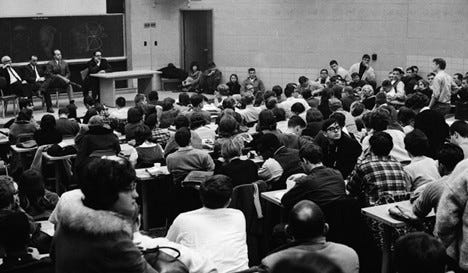
Ann Arbor punched above its weight in the anti-war movement. The Students for a Democratic Society (SDS) was founded in Ann Arbor and its famous Port Huron Statement was authored by Michigan alum Tom Hayden. The SDS led many anti-war protests, including the March 1965 “teach-in” on the University of Michigan campus and a March on Washington that same year. The White Panthers were also founded in Ann Arbor, and they married anti-war protest to a broader critique of authority, education, and social hierarchy. Yet in the midst of all this anti-war energy, the pre-adolescent boys of Ann Arbor loved playing at war and death. The Vietnam war was too real for us to handle, and so our first loves were WWI and WWII. Like dinosaurs, they were scary, dangerous, and safely in the past.
Our love of WWI stemmed partly from Snoopy’s fantasy life in Peanuts, in which he romanced mademoiselles, drank wine in the barracks, and shot it out with the Red Baron in the sky. But it was more than that. We sensed that aerial combat was a new thing in WWI, still full of romance and novelty just a few years after the Wright Brothers had flown at Kitty Hawk. We knew Sopwith Camels from Fokker triplanes at a distance of fifty years. We loved the trenches, too, with their rats and their makeshift construction, and I was especially fond of history’s first submarine battles. If you were a boy of my cohort, then WWI was a peach of a war.
Yet we loved WWII even more. I owned picture books about The Battle of the Bulge and Carrier War in the Pacific, and I borrowed library books about D-Day, Guadalcanal, and Leyte Gulf. My favorite 5th-grade novels were about a Jewish family’s escape across Lake Constance and about a Japanese fighter pilot’s sad wartime experience. These books were serious but, being books, they were less visceral than movies or television. There had been dramatic and realistic shows like Combat! and 12 O’Clock High, but by the late 1960s television shows like McHale’s Navy and Hogan’s Heroes made WWII seem like a lark. War might be dangerous, but its main effect was to inculcate an attractive bonhomie among the soldiers and sailors. M*A*S*H debuted in 1972 and, especially at first, it also tilted more towards comedy than tragedy. One message I took from all this was that war was very interesting and, at least occasionally, quite fun.
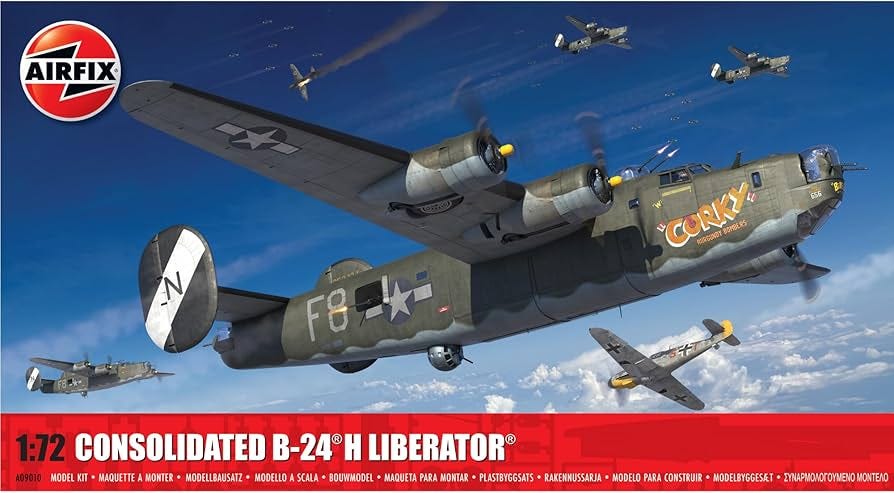
We brought the fun of war to our playtime, too. We built free-form Lego versions of WWII aircraft carriers, Dauntless dive bombers, and Sherman tanks. We made plastic airplane models of the B-17 Flying Fortress, the P-51 Mustang, and the B-24 Liberator (mostly made by Ford in nearby Ypsilanti). The Avalon Hill Company of Baltimore made board games like Afrika Corps, Midway, and Luftwaffe that were played out over large maps with hundreds of game pieces representing tank squadrons and army divisions. My older brother mastered their massive rulebooks and would win with an abstruse move that I didn’t know was possible. He also entertained me with his model rockets that blasted into the sky from our cul-de-sac before parachuting down on top of trees and houses. The rockets had space exploration names like Apollo and Gemini, but it was not hard to think of them as ICBMs.
The Vietnam War never caught my youthful imagination the way that those earlier wars had. Vietnam was in the pages of the Ann Arbor News and the Detroit Free Press, on the CBS evening news with Walter Cronkite, and on the public radio station that my parents favored, but my friends and I never paid it much attention. Perhaps we ignored it because it was intrinsically less interesting, with smaller stakes and ill-defined battle lines. Or perhaps we liked the binary morality that still governed our view of WWII but that seemed less applicable to Vietnam. Or perhaps it was that we didn’t know any of the combatants - my brother, for example, was 17 years old when the last young man was drafted in 1973.
Yet while I didn’t know them, there really were young men from Ann Arbor – about 60 of them in fact - who served and died in Vietnam. Many of them enlisted shortly after graduating from Ann Arbor High in the early 1960s, a half generation older than me. Most of them were single, though a few were married and had kids. Most of them were from middle-class families unaffiliated with the University of Michigan, but some of the families had ties to the university or to successful businesses. Some were black but, reflecting Ann Arbor’s population, most were white. Here are a few of their stories.
George Airey, Jr. (b. 1944) grew up on Avon Road in a posh neighborhood near the university, about a mile from where I grew up. George’s grandfather had managed a company that made gas gauges and other instruments for the auto industry and his father developed real estate and led the local United Way campaign. Ten-year-old George wrote in to the Ann Arbor News on April 29, 1955:
Dear Sirs: You don’t have to look to Detroit or Columbus for a pogo champion, you have one right here in ann arbor. My name is George V. Airey. I’m 10. I live at 901 Avon and I have jumped more than the others. I have jumped 4,210 and my mother counted for me with pad and pensel. Yours truly, George V. Airey
The letter was accompanied by a photo of George on his pogo stick with his hands in the air. In 1968 George died of fragmentation wounds when his battalion came under attack from the North Vietnamese Army in Quang Tri Province, one of nineteen men who died in the action. He was 23 years old and his mother remembered that he loved to ski, play guitar, and tend his tropical fish.
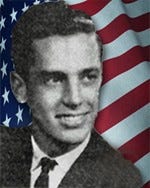
David McKenzie moved from Melvindale – a blue-collar suburb of Detroit – to Ann Arbor in 1959 at the age of 14. He lived in a modest ranch house across from Arborland and he was captain of the football team at Saint Thomas High School. Darlene Imus, three years younger, later remembered him as a “`celebrity’ among the students.” David enlisted in the Marines right after graduation and was killed at the age of 20 in 1965 while on a search and clear mission south of Da Nang. His marine buddy James Halter wrote in 2000:
Dave was my friend and my fire team leader. I was there when he died. I carried him to the chopper. He was to young to die. Many of our best friends died that day. I know that a part of me died with them I will always remember. I know I will see him some day. God how we hated that war.
Darlene Imus also recalled how, when the mother superior announced Dave’s death, the usually boisterous halls of Saint Thomas were completely silent as the kids filed out to their buses.
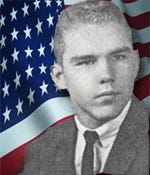
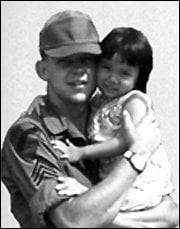
Pfc Clive Vere Mosier (b. 1943) was raised in Chelsea – a few miles from Ann Arbor - the son of “Mr. and Mrs. John Mosier.” Clive married and worked as a foreman with Seller’s Construction Company before entering the Army on September 1, 1966. Mosier was blown up in April 1967. According to his widow,
He was known as “Buster” by all his family and friends. Clive loved baseball. His favorite foods were chocolate chip cookies and fried chicken. He sent a picture of him holding a little Vietnamese girl. He said in his letter, ‘Honey, I miss you greatly, but these people need us. No one else will help them. We have too.’
His wife remarried in 1968 and later founded Ann Arbor’s Christian Development Center that for a time provided social services in town.
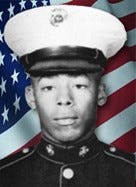
Corporal Richard Mark O’Neal lived at 1615 Pear Street, a modest house on the north side of town, and played football at Ann Arbor High School. He joined the Marines shortly after his 18th birthday and trained at California’s Camp Pendleton before serving in Vietnam’s Quang Tri province. He died on July 26, 1968 due to head injuries suffered in a truck accident. O’Neal is fondly remembered on Vietnam memorial message boards:
Ricky, you were my older brother, fellow Marine and inspiration in life, Semper Fi. I have missed you more than words can express, I will always love you. Bruce O’Neal
Your brother,...,named me in honor of you. I hold your name in high regard and I continue to work harder every day to be the best person I can be. Every day I wake up is a chance to become better than I was the day before. Richard Mark O’Neal (nephew).
I grew up playing sports with his younger brother Steve. In elementary school, I remember Steve telling me his brother was killed in Vietnam. I remember going to Steve’s house and seeing the picture of Richard. I would like the O’Neal family to know that I think about Richard every Memorial Day and the sacrifice he and the O’neal family made. All the best to you! Tracy Gause
Tracy Gause’s brother Jay was one of my favorite high school tennis teammates.
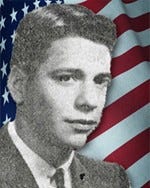
Michael Woodrow Hunter was killed in January 1970 when a 50 caliber round sheared off the main rotor on his helicopter. Contrary to much of the narrative – including my own - about who enlisted and died in Vietnam, Mike was the son of an academic. His father Woodrow Wilson Hunter was a sociologist at the University of Michigan Medical School who wrote monographs for the federal government with titles like Preparation for Retirement, and Preretirement Education for Hourly-Rated Employees. Twenty years after the death of his son, 80-year-old Woodrow Hunter was a featured speaker at the dedication of the Washtenaw County Vietnam Memorial. Woodrow remembered Mike as an “intelligent, kind, cheerful, loyal” and caring man who was “tormented” when “it became necessary to kill other human beings.” Woodrow also said that in his last pictures Mike “looked so weary” and “much much older and so serious.”
Our son wrote his last letter to say that he expected to be home in two weeks, you can imagine how thankful we were. The next thing we knew there was an officer standing at our door to tell us that our son had been killed when his helicopter had been shot down.
Such is war.
Mike Hunter grew up a few houses away from me. I have no recollection of the Hunters but, a few years later, I became friends with Brian when his family moved into the old Hunter house. Brian and I bonded over our joint admiration of his copy of Cherry Delight – The Italian Connection, a story about how “the world’s sexiest crime fighter” gave her all “to the destruction of the mafia.” The book was credited to Glen Chase but it appears to have been the work of Gardner Fox, a prolific author of comic books and pulp fiction. You can buy it on Amazon today and its reviewers are accurate when they describe it as “campy fun” and “a sex-filled romp,” which is all to say that you can see why it appealed to my 13-year-old self. I have no memory of the plot, but I do specifically recall how Cherry could tell that one of her contacts was “all man” by the way that he looked at her in her swimsuit. Aspiring to one day be a man, I found this very inspirational. Cherry Delight was written after the time when Mike Hunter would have been interested in such dreck, but there had been trashy books – with titles like Campus Tramp and The Velvet Underground – available to the adolescents of the 1950s. I hope he had a few of them at his disposal and that, like Brian, he stuffed them into the couch cushions to hide them from his parents.

It unsettles me that I was playing at trifling war games when the real thing was going on, that I was obsessed with WWII when there was an atrocious war going on at the same time, and that I was ignorant of how many people, some of them from just up the street, were being killed while I was building plastic models of B-52s and P-51s. It unsettles me, too, that I read this pulpy, adolescent novel right in the house where Mike Hunter had recently grown up to be a man. Aging inevitably brings a sense of loss, as more actions, places, and things are imbued with connections to the dead, and so our steps are increasingly attended by ghosts. But sometimes they were there from the beginning.
Hey dude, great piece. I think your focus is right, about the young guys who lost their lives and were good people. They didn't really know why they were there, but they went. It's funny, when I was in Hong Kong, I would sometimes imagine getting hit by a bus, and then while I was dying on the street thinking, what the hell am I doing here? It's weird, you don't really think about it until you're in another country, but you don't wanna die there. I'm glad you remembered these young guys. I really liked the Pogo champ. It's a good thing to be interested in war, then you're a witness to horror, to the young people dying alone, far from home.
Cherry Bomb is a fantastic title.
As a kid I also enjoyed learning about war, especially WWII. I was especially enamored by aircraft (BTW -- just spend 6 hours in the USAF Museum in Dayton -- not enough time). In my adolescent years I had a lot of interest in becoming an AF pilot, I even started some research about how I could qualify for the Academy.
Then in my sophomore or junior year my HS teacher had us read Slaughterhouse Five, and I lost interest.