Cusa y Maria

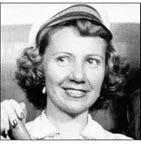
My parents-in-law were born in Cuba’s Oriente province, hundreds of miles east of glamourous Havana. Carmen Loza was born to a large family in 1924 in Cuatros Caminos, a hamlet where my father-in-law said the people had grass growing between their toes. Paul Mastrapa was born on a cattle ranch near the small inland town of Velasco, wealthier but no less rural than Quatros Caminos. The Mastrapas were rich by the standards of eastern Cuba in the 1920s, a boomtime for the Cuban sugar industry, though that didn’t prevent Paul’s mother from dying from cancer when he was a young boy. Paul also came from a large family, many of whom migrated to the United States, including his sisters Esther and Cusa. Aunt Cusa could hardly have been less like my mother-in-law. Carmen was sweet and accommodating, though with a steely underpinning that rose to the surface as needed. Cusa was tough and demanding, with the kindness and charm tucked underneath. Cusa mixed that toughness in with measures of spaciness and eccentricity, peppering her conversations with appeals to St. Jude, the patron saint of lost causes. “St. Jude,” she would say as she fingered her rosary, “he’s so good.”
Cusa won me over on the first day I met my future in-laws, a day on which I had been hazed in ways both pleasurable and annoying. If I was smart, I would have taken the familial interest as evidence that my psychiatrist was serious about me, and that the family thought I was someone worth kicking the tires on. But it was a long day and at the end I was ready to stop being poked, prodded, and evaluated like a toro at a cattle auction. As we prepared to head back to Chicago, I saw Cusa talking to her niece in her halting, birdsong Spanish, and I thought this was one last discussion of my inadequacies. Once in the car I asked what Cusa had been saying.
“‘The boy – I like him,’” recounted my psychiatrist.
“Which boy?” I asked.
“You,” she said.
“Cusa said that?” I asked, relieved. “She said that she liked me?”
“That’s what Cusa said, `The boy – I like him,’” she said, giving my arm a squeeze.
Cusa was eight or nine years old when my father-in-law was born and yet, according to their drivers’ licenses, she was a full decade younger than him when she died. Cusa graduated from the University of Havana in 1945 before moving on to graduate study at the University of Michigan. Women have accounted for more than 2 out of 3 of recent graduates from Michigan’s pharmacy school, and the pharmacy profession has been lauded as being friendly to parents, especially mothers, because it accommodates part-time and intermittent careers. Yet pharmacy was not such a welcoming profession to women when Cusa entered it in the early 1950s. The pharmacists of Cusa’s day – in either Cuba or America - tended to run their own stores and so needed to be businesspeople as well as pharmacists, and it was hard to take leave or work part-time as a business owner. As a result, Cusa entered a pharmacy profession that was ten percent female, an even smaller share of whom spoke English with a thick Cuban accent. So what Cusa did, in making a successful career in pharmacy when and where she did, was quite remarkable.
A key to Cusa’s ultimate success was that she served the expanding population of Latin American immigrants in Chicago. Those immigrants came primarily from Mexico and other Central American countries and tended to work in restaurants, landscaping, or construction. The Cuban immigrants in Chicago, by contrast, tended to be from educated families that had fled Cuba after the Castro revolution of 1959. My in-laws came in the mid-1950s for Paul’s medical residency and probably would have gone back to Cuba if not for the revolution. But I think Cusa would have stayed in America even if Castro’s revolution had never happened – Cuba would have been difficult for a woman of her independent temperament. “Never rely on a man,” she told her nieces.
When I met her in the 1980s, Cusa was running a thriving farmacia on the near northwest side of Chicago. The farmacia’s official name was “La Perla Drug” because Cubans refer to their island as “the Pearl of the Caribbean.” The farmacia was in its own one-story brick building, skinny and deep with high ceilings. It was located on a gritty part of North Avenue, about twenty blocks west of Lake Michigan and five blocks west of the JFK Expressway. The farmacia shared its block with a check-cashing service, a Western Union, a Salvadoran restaurant, and a bodega. The freeway and the endless stream of buses going back and forth on North Avenue left soot on parked cars, on the sidewalk, and in the farmacia itself. With all the signs in Spanish, you could think you were in Havana if you kept your eyes down. But if you raised your line of sight a bit, from the farmacia’s cash register you could see the Sears Tower and the John Hancock Building just a few miles away, their radio broadcast antennae flashing brightly over the bodega’s roof.
Cusa would often take her nieces and nephews to the farmacia on weekends. The drive to the farmacia was long because Cusa avoided the freeway and nauseating because she accelerated and punched the brakes unpredictably. Punchitis, the kids called it. Cusa was once stopped at a light in the go-straight lane of a large intersection. The left turn signal turned green and, along with the cars to her left, Cusa’s El Dorado lurched forward only to stop abruptly when she almost ran into the cars turning left from the opposite side of the intersection. Cusa ratcheted the El Dorado back to its previous spot and, when her signal finally turned green, she proceeded on. The police officer behind her could have let it slide, but he pulled her over in the busy traffic of southbound Waukegan Avenue.
“Let’s see your license and registration, Maam,” said the cop.
“Why did you stop me?” asked Cusa as she distractedly motioned a niece to extract the documents from her glove compartment.
“Because, lady,” said the cop, “you went through the intersection when the light was still red.”
“But I did not go through the intersection!” argued Cusa, wagging her index finger.
“Well, you entered the intersection against the red light,” said the cop, “and that’s still a violation.”
“But, but, but I did not go through the intersection,” Cusa sputtered.
“I was right behind you, lady,” said the cop. “So don’t argue with me.”
“But it was not my fault that the car entered the intersection,” continued Cusa, shifting her line of defense.
“How is it not your fault, lady?” asked the cop, now curious.
“It’s these new shoes,” said Cusa, pointing at the expensive Italian shoes on her feet.
“It’s the new shoes, lady? Really?” asked the cop.
“Yes,” said Cusa. “It’s these new shoes. My feet! They did not press the pedal. It was the shoes that did it.”
“Never heard that one before, lady,” said the cop as he strode off to his car with Cusa’s documents.
The cop took an inordinately long time in his car, and Cusa became more and more impatient. She ultimately laid on the horn, a haughty Cadillac blast.
“Why did you honk at the police officer?” asked one niece.
“Because it’s too long,” said Cusa. “Because he takes too long.”
“He’s going to be mad, Cusa,” said the other niece.
“He is mad?” said Cusa. “No. I am mad!”
The cop quickly got out of his car behind the El Dorado and walked up to Cusa’s door, holding a yellow ticket that flittered in the breeze.
“Here’s your ticket for running the red light, lady,” he said.
Cusa made him wait but ultimately took the ticket with two fingers, as if it were dog shit, and put it in her purse with a dismissive gesture.
“Do you want another ticket, too?” asked the cop as Cusa was starting to roll up her window.
“Why would you give me a second ticket,” said Cusa, “when I did nothing wrong for the first ticket?”
“For unnecessary horn-blowing,” said the cop.
“But that was not me!” said Aunt Cusa. “It was another car that sounded its horn, just while it was passing me.”
The nieces giggled in the back seat at Cusa’s misrepresentation, quietly so as to not earn a lashing from her formidable temper.
“Be on your way, lady, before I go back for my ticket pad.”
And with that Cusa turned her head proudly, rolled up her electric window, and continued on to the farmacia.
The inside of the farmacia had dark wooden floors, yellow walls, and shelving that ran high up either side. There was a long counter down one side, and it was behind this counter that Cusa held court. Cusa would physically examine many of her customers on the counter, taking their temperature, checking their pulse, gathering a medical history. Cusa would recommend a medication that she would then sell, prescriptions neither offered nor asked for. The prices at the farmacia were high - I once saw a Nicaraguan laborer buy 50 two-packs of ibuprofen at a cost of $20 when a 100-tablet bottle went for $1.75 down the street at Osco. But, unlike the chain pharmacies, Cusa’s customers at the farmacia got a physician and a pharmacist all at one go, and while the drugs were expensive, the pseudo-doctoring was free and provided in the Spanish language, and that made all the difference. Cusa was usually kind and solicitous towards her customers, but she was unpredictable, too, turning on certain customers and maintaining a long-running feud with the neighborhood’s Panamanian subpopulation.
While helping close down the farmacia upon Cusa’s retirement in 1987, I pawed a high shelf in the hope of finding something that could be matched to her disorganized invoices and thereby returned to the manufacturer for a refund. I pulled a mound of dust onto my face while fumbling for an out-of-date tube of Preparation H, almost causing me to fall off the stepladder as I gasped for breath. I later asked whether the dirt and grime were recent developments, but the nieces said that the farmacia had always been dirty, and that they had once used that fact to get their little brother in trouble.
“Cusa,” he had asked, “my sisters want to know why you don’t clean your store when it’s so dirty.”
P- was just barely old enough to see this as an incendiary question, but he thought attribution of the question to his sisters would protect him from Cusa’s ire. But Cusa didn’t hear that part.
“What do you mean about cleaning, you idiot!” scolded Cusa. “I clean the store!”
“But then why is it so dirty, Cusa?” asked P-, now puzzled and forgetting the attribution to his sisters.
“It’s the smog, you idiot!” yelled Cusa. “Don’t you see those big buses and trucks going by on the street? They make the store dirty! Now go away you stupid boy!”
And little P- did go away to the back of the store, teary, to find his sisters giggling behind the hair net display. The nieces still cackle.
The farmacia had a wide range of products and services for sale, in addition to pharmaceuticals. The long counter on the side included sections for jewelry and Spanish perfumes that were much in demand by Cusa’s Latin American clientele. There was a fabulous candy display; candy bars such as Reese’s Peanut Butter Cups, Baby Ruth, and Nestle’s One Hundred Thousand Dollar bar; hard candies such as the complete line of Brach’s butterscotch and a range of local peppermints; and novelties such as tootsie rolls, lemon tape and tiny wax bottles that were consumed along with the elixir inside them. Cusa’s nieces and nephews were each allowed to take a paper lunch bag full of candy home with them at the end of a visiting day. There was also a watch sales and repair shop in the front of the store, the service provided by a subletter named Senor Torres who worked right up against the front window with his tiny tools and his magnifying glasses. Cusa illegally sold Puerto Rican lottery tickets from behind her counter and my mother-in-law once won $5,000 on a ticket purchased at the farmacia.
All sales were made in cash at the register at the front of the farmacia. That was partly because much of Cusa’s immigrant clientele did not have the means to transact in any other form. But it was also to avoid taxation or other government snooping into her business. The cash register was irresistible to her nieces and nephews, and so Cusa would occasionally let them ring sales up on the register. But they were only allowed to ring up the cents - $0.85 on a $3.85 purchase, for example - while the more important dollar amounts were written on a paper bag on a shelf underneath the register. True scammers keep three sets of books – one for the creditors, one for the IRS, and one for themselves - but Cusa kept no books at all. Cusa stored her cash in an iron safe in the back room of the farmacia, periodically taking the cash to her bank in Glenview. She was occasionally robbed at gunpoint, a fact she blamed on the Panamanians.
Cusa never had children, but she was a dedicated aunt. Cusa also helped out many younger Latin American men, many but not all of them relatives, pushing them to learn a trade like HVAC at her expense and, in some cases, setting them off on successful career paths when they had previously been adrift. Cusa was also generous with her time and money when it came to Cuban relatives that were trying to come to the U.S., allowing her brother Jorge’s entire family to live with her for extended periods. Cusa also took my sister-in-law on many long and expensive trips to places like Egypt, Japan, and Argentina, back when most American tourists went to Europe if they left the U.S. at all. Cusa surely got something out of the deal – companionship, better English language ability – but it was kind of her, too. The two of them developed a special relationship, and my sister-in-law took good care of Cusa in her long dotage.
Cusa was often rude and imperious to other shopkeepers, foreign or domestic. She would sift slowly through racks of clothes and bring a selection up to the cash register, asking about pricing whether or not the garments already had a price tag. She would snort at the storekeeper’s reply and throw the clothes on the counter as if the quoted price were an affront to her dignity. The nieces were once chatting innocently with a storekeeper while Cusa, seemingly unengaged with the conversation, looked through some nearby racks of blouses. “Well,” the shopkeeper said, “I’ve been in business for thirty years,” before she offered an opinion about prospective changes in clothing styles. Cusa straightened up as if she had been hit by a cattle prod.
“Thirty years! Hmmph,” said Cusa. “I was in business for forty years. Forty years! Nobody tells me about business.”
“I’m sorry,” said the storekeeper, hoping to recover a sale. “I didn’t mean to imply that you didn’t know something.”
“Nobody tells me anything,” said Cusa, wagging her finger.
And with a show of injured dignity, Cusa then turned to walk out of the store, not deigning to see if her nieces followed.
Crossing international borders with Cusa was challenging because her travel documents – her passport, her driver’s license and in some cases her visa – disagreed on certain important issues, such as her name and birth date. The last name variation was in some ways understandable, as she had been born with the last name of Mastrapa, had married a man named Livermore, and then gone back to using Mastrapa. The birth date confusion was less to Cusa’s credit, as with each new document she moved her birth date back a year or two so that, when she was in her mid-80’s, her passport said she was 65. But there was one piece of information that stayed constant across Cusa’s various forms of identification. The name “Cusa” was really just a family nickname, one she had been given as a little girl and that had stuck with her whenever her siblings and their offspring were around. But her real name, the one on her passport, was “Maria.” It’s a good name.
This is a fantastic piece Will. Queen Cusa.