Geeksville

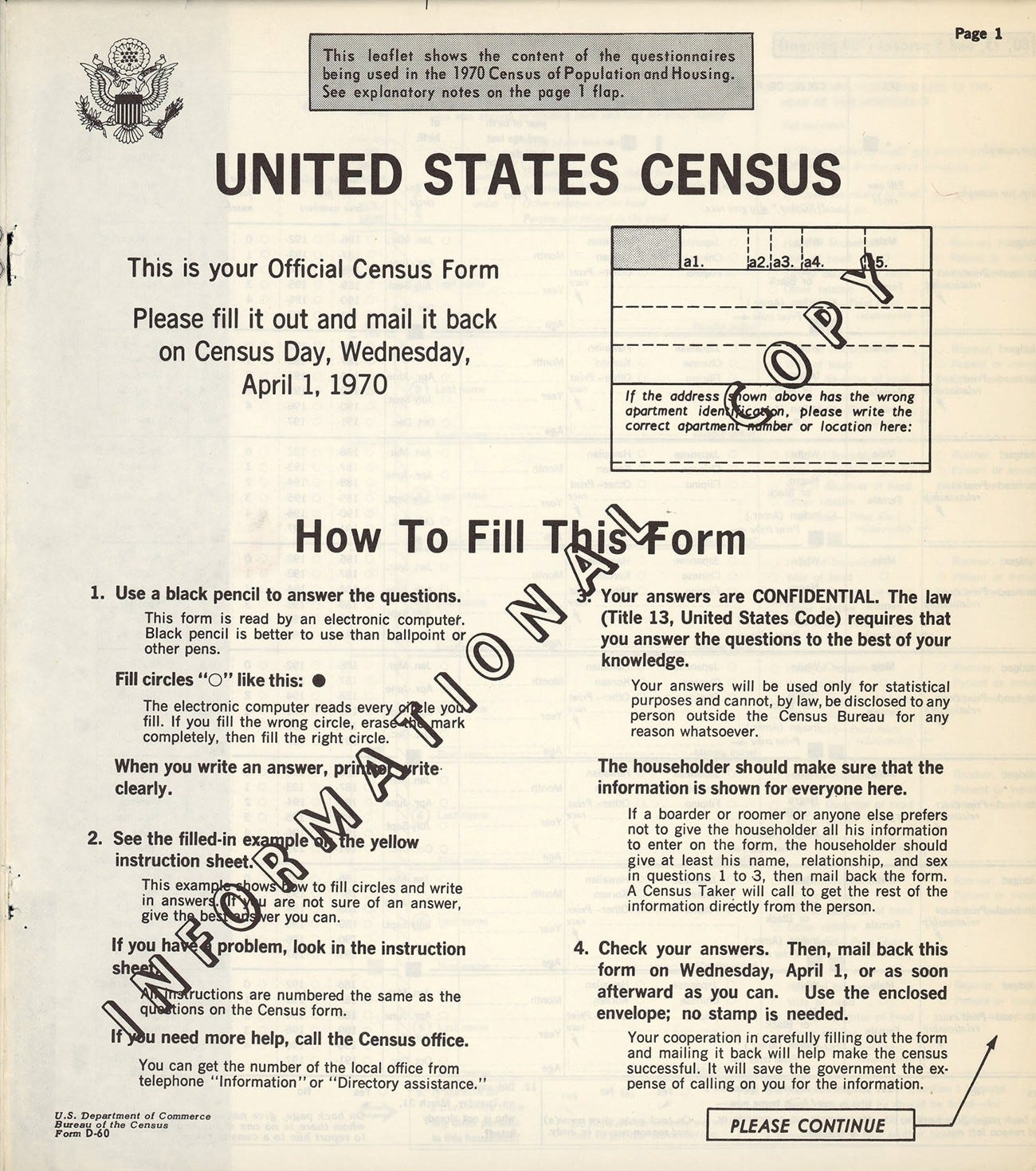
I was a pretty normal kid, but I had my quirks, too. One of these was my fascination with the 1970 census, the questionnaires for which were being mailed out on March 1, just a few days after my eighth birthday. I had alerted my parents of my deep interest in helping them fill out the questionnaire and so I was very excited when, after school one day, my mom waved me over to her desk so that I could look at the Census mailing that had arrived that morning.
“Great,” I said while tearing through the questionnaire, “but where is the actual response sheet that contains our answers to these questions?”
“Oh,” she said, “I’ve already mailed that part back. I thought it was just the questionnaire that you wanted to see.”
“No!” I said, “it’s not just questionnaire that I want to see! I want to see the answer sheet, too!”
“Too bad,” she said as she went back to the homework for her class in Library Science. “It’s already in the mail.”
I cried that the next census forms would not be available until 1980 - infinitely far ahead to my eight-year-old self - but Mom barely looked up from her desk. Mom had an odd mixture of care and indifference, like many 1970s parents, but in this case I think she mostly did not want me to see her answers on the response sheet, perhaps family income in particular. The questionnaire had assured her, after all, that her answers were “CONFIDENTIAL,” and to her that meant being hidden from her own kids as well as the neighbors and the Internal Revenue Service.
I was mopey for several days thereafter, but the whole experience reflected and perhaps even heightened my childhood interest in statistics and measurement. I loved atlases, almanacs, and the Guiness Book of World Records and, as an adult, one of my most prized books was the Statistical Abstract of the United States, a compendium of American and international statistics before the days of easy internet access. I memorized the capital of every country and every state, and I routinely memorized odd lists of statistics like the 100 largest cities in the world or the world’s 20 deepest lakes, all facts built up from surveys or field observations. I was also very interested in sports statistics, then in their infancy, and spent hours on the weekend reviewing the major league leaders in home runs, runs batted in, and earned run average. I was a nerdy, data-driven kid, but then I had a lot of company in the Ann Arbor of my youth.
The pre-eminent economic and demographic data collection outfits in the United States - then and now - are the Census Bureau and the Bureau of Labor Statistics (BLS). Both are headquartered in or around Washington, DC, and I later worked as a BLS economist for a time and had close working relationships with Census Bureau staff as well. Yet, outside of Washington, Ann Arbor is probably the headquarters of demographic data collection in the United States. There were a range of institutions in the Ann Arbor of my youth – some tied to the University of Michigan, some not – who collected, disseminated and in some cases created demographic data that were of great use to social scientists around both the United States and the rest of the world. Ann Arbor has long punched above its weight in demography, and many of these efforts were initiated around the time I moved to Ann Arbor as a child.
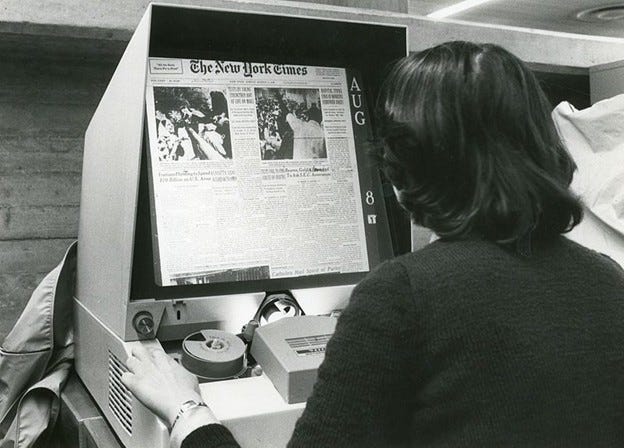
Perhaps the first example of this tendency was the creation of University Microfilms in 1938 by University of Michigan graduate Eugene Power. Until the mid-1990s, virtually all academic papers, books, and dissertations were circulated via paper media. Yet it was expensive to produce and ship those heavy tomes, and libraries found them expensive to store, too. University Microfilms – much later absorbed into ProQuest – was an innovator in the transfer of academic books – and especially dissertations – into microfilm formats that could be cheaply created, shipped, and stored. Reading these documents required access to an in-library projector, which was a mild inconvenience, but the libraries themselves much preferred receiving and storing the material in this format. University Microfilms was very much in business in my days as a young scholar in the 1980s and I always smiled when I saw, at the bottom of various title pages, the Zeeb Road address for University Microfilms’ operations in Ann Arbor.
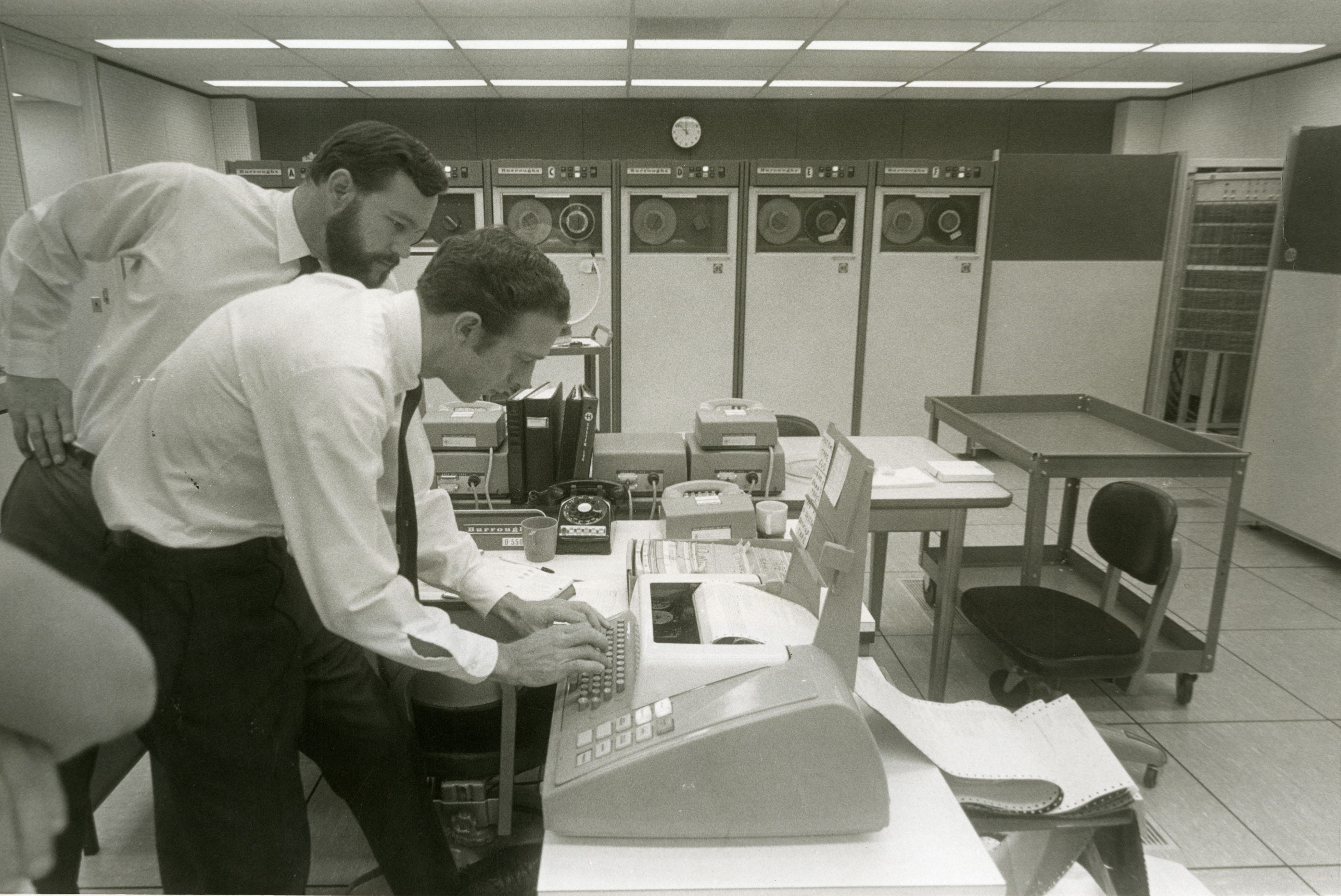
In 1962 the UofM itself set up the Inter-university Consortium for Political Science Research, or ICPSR. Researchers at subscribing universities could get, through the mail, reel-to-reel magnetic tapes that, when “mounted” to mainframe computers, could dispense large amounts of data that would otherwise be inaccessible. These tapes included data on elections and congressional votes – hence the political science name – but ICPSR expanded its offerings to include data from the BLS, the Census Bureau, and from many other sources. When I was a young professor in Baltimore, I ordered dozens of tapes of ICPSR data and was always asking the Johns Hopkins computer operators – a real occupation back then – to physically mount the tapes so that my software could access the data. It was incredibly clunky by modern standards, but it was the only way to access these data prior to the internet and so ICPSR was essential to my work as a junior researcher. There were many more like me at universities across the country.
The University of Michigan was in the business of collecting data as well as disseminating it. The UofM’s Survey Research Center (SRC) was founded in 1946 to conduct a Survey of Consumers that, in slightly altered form, continues to this day. When you read or hear about consumers’ confidence in the economy, the underlying source is typically this Michigan survey. The SRC expanded its portfolio over years to address issues related to health, retirement, and environmental studies, and the attendant surveys are widely used. The Panel Study of Income Dynamics (PSID) surveyed 5,000 families in 1968 and has followed them – and their offspring – ever since. The PSID was very much an outgrowth of President Johnson’s War on Poverty and so, in addition to its main random sample, it had a subsample of initially poor families that they also followed.
Researchers and policymakers had long wondered whether people tended to cycle in and out of poverty or whether there was a stable subset of the population that tended to be poor year after year. As a longitudinal survey, the PSID was able to show that the answer was “some of both.” One of my teachers at Huron High once asked us whether the economic identity of one’s parents made a big difference in one’s opportunities and, reflecting the consensus at the time, the answer he sought was that it did not make much of a difference. (Perhaps my teacher had read too many Horatio Alger books in his youth.) Michigan researchers later used the PSID to establish that while the income deck really is shuffled across generations, the shuffle is not so complete as to make parents’ resources irrelevant. Subsequent work using other data – such as intergenerationally linked tax records – has tended to support this original work from the PSID.
I didn’t have much grant money as a young researcher, but I used what little I had to amass a bookshelf full of hardcopy guides to the PSID survey, one for each of the 25 or so years of data that existed as of the early 1990s Each thick book covered a single survey year and, to use them, you often had to have ten or twelve spread out in front of your computer screen as you wrote computer code to, hopefully, interpret the data correctly. Those PSID codebooks were some of my proudest possessions at the time, but of course I’ve long since pulped them as more accessible online versions of the same information became available.

The ICPSR and the PSID were wonderful efforts to disseminate or collect data that would be useful in social research. Yet there was a third type of social science effort ongoing at the time my family moved to Ann Arbor in 1965. The Perry Preschool Project was an actual experiment – complete with randomized treatment and control groups – of the efficacy of intensive intervention in the lives of pre-school children. The pre-school was actually in Ypsilanti, Ann Arbor’s neighbor, and it served a population of quite underprivileged pre-school kids. The control group families got a standard level of care while the kids in the treatment group got extensive tutoring for the kids and coaching for the parents. The kids were mostly black and the teachers, coaches, and counselors were mostly white, and so the entire project had more than a wisp of white saviorism to it. Still, the Perry Preschool Project was an earnest and in some ways fruitful effort to figure out how best to help disadvantaged kids.
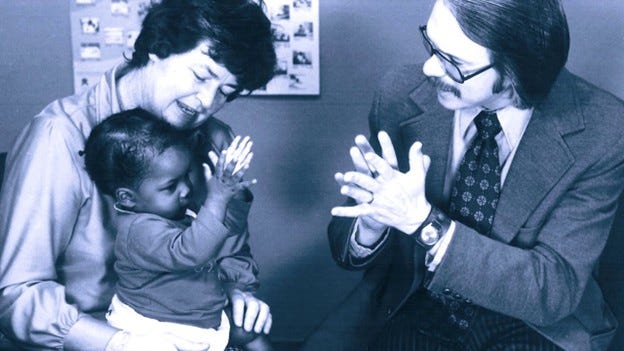
There were about 200 kids in the total population and they were then followed through school and into adulthood, with data on schooling, income, marriage and fertility. The study was organized by a young Ypsilanti school psychologist who had trained at the University of Michigan, and while the treatment was expensive, the better outcomes for the treated group, particularly in the form of avoided crime, probably made it socially worthwhile. There are modern debates about how well the Perry results “travel” to other times, treatments, and target populations, but the Perry experiment still influences debates about the likely efficacy of changes to Head Start and other efforts to improve pre-school education. The U.S. government spends a lot of money on old people like me, but the Perry Pre-school experiment suggests that we might be wiser to divert some of that money towards the development of disadvantaged kids.
An economist friend who ran the PSID for a time points out that there were similar efforts at other places, like Ohio State, University of Chicago, and the Rand Corporation. Yet I think he is too modest and that, indeed, there was something special about post-WWII Ann Arbor where, as a group, people were making uniquely broad efforts to collect and disseminate economic and demographic information that would provide the substrate in which people could argue about economic policy. The relationship between research and informed policymaking is at best tenuous, but I still believe that some facts are better than no facts and I’m a little proud that Ann Arbor helped to create an environment where policymakers at least had the chance to be informed by real data.
I didn’t know anything about the PSID, the ICPSR, or the Perry Preschool project on that day in 1970 when I cried because my mom wouldn’t let me fill out our census response. Yet I think I was absorbing some of that water and that Ann Arbor’s devotion to social science research and data collection had a strong effect on my ultimate career choices. I wasn’t the only one to drink it in, either, as a surprising number of my generation of Ann Arborites also went on to be economists. One of my brother’s math games’ friends went on to become an economist at UCLA and then General Motors and the Commerce Department. Two of my ninth-grade classmates went on to become quite successful Ph.D. economists working at Dartmouth and Wellesley, respectively. Gene Sperling, one of the best youth tennis players in Ann Arbor, went on to a long career in economic policymaking among Democratic elites, including the administrations of both Clinton and Obama. George Shepherd, another excellent tennis player, is a lawyer and economist at Emory Law School. Ann Arbor is a university town and so many of us who grew up there went on to be professors or researchers ourselves in all kinds of fields. Yet I think that the outsized role that Ann Arbor played in social science data collection made economics a particularly attractive field to people of my cohort. I wonder how many of them also cried on that day in 1970 when the Census forms came out.
Really good article I think for context about your choice of career. You could flesh out more about that for the book. And about parenting. Either way, I love a good demographic survey method.
This reminded me that my Ph.D. thesis was put on MicroFilm back in 1973. The thesis took me 4 years to complete but with today's technology, it would take a budding scientist only about 6 months. However, the findings are still valid, which is saying something these days when a large percent of data is irreproducible.