The Clintons

I was recently elected President of my neighborhood association at its annual meeting. The campaign was, um, not arduous because nobody else would do the job and, indeed, the office had been vacant since Covid. My main duty will be to run a July 4 picnic and bicycle parade led by the fire station’s hook-and-ladder. The annual meeting was very 1950s but for when a white woman – who hadn’t volunteered for anything - bemoaned the election of a white man. That was very 2026.
Residents often ask the association to weigh in on local political issues like road-widening, rezoning, and school redistricting. It’s the redistricting that gets people most upset and I’d probably be upset too if my kids weren’t out of the house. Yet we are a purely social group and do not take political stances…even if that leaves some residents annoyed with their president.
Far more people were annoyed with my dad in early 1972 when he was a trustee of the Ann Arbor Public Schools (AAPS). Clinton Elementary School (below) was seriously overcrowded as new housing – some subsidized, some not – was built on the south side of Interstate 94. The school was built in 1967 for 300 students, but by early 1972 nearly 600 students crowded into the school and its rented portables.
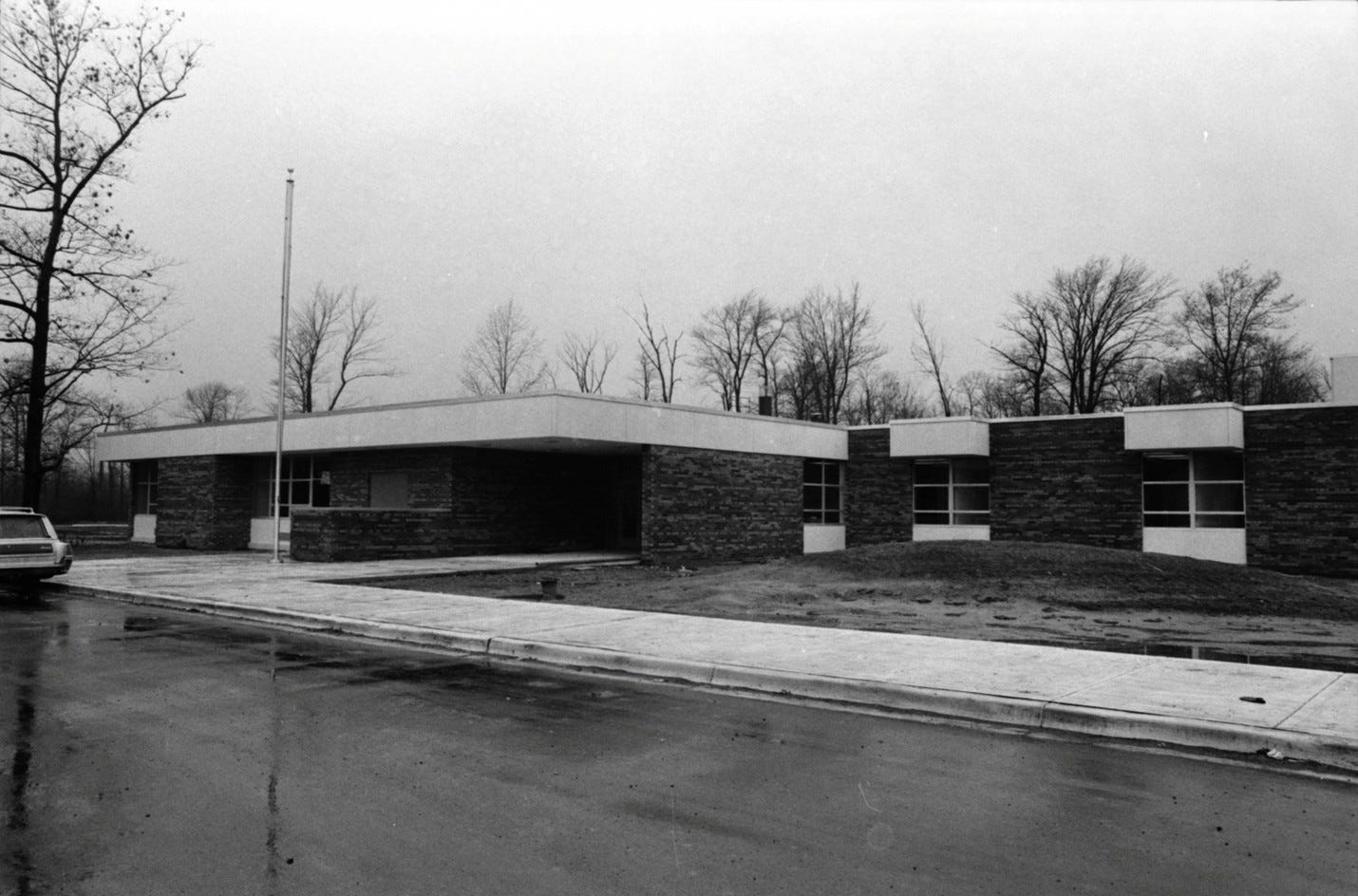
Clinton parents vented their frustration at school board meetings and in the pages of the Ann Arbor News. To take just one example, “Mr. and Mrs. Wood” wrote in November 1971 to say:
Those of us in the Clinton School community are in the crisis, but our burden would be lessened if individuals and PTO’s throughout the city who felt empathy and perhaps a twinge of guilt, expressed their concerns over our situation to the school board and school administration.
The Board heard the pleas and mooted several plans to alleviate overcrowding at Clinton.
One proposal was to bus some Clinton kids to vacant classrooms in parts of Ann Arbor where the post-war Baby Boom had faded. This would match supply and demand for space, but the head of the Clinton PTO said that
We do not want our children … used as pawns to fill empty classrooms scattered throughout the city. Why should our children pay for poor planning of school officials and city government?
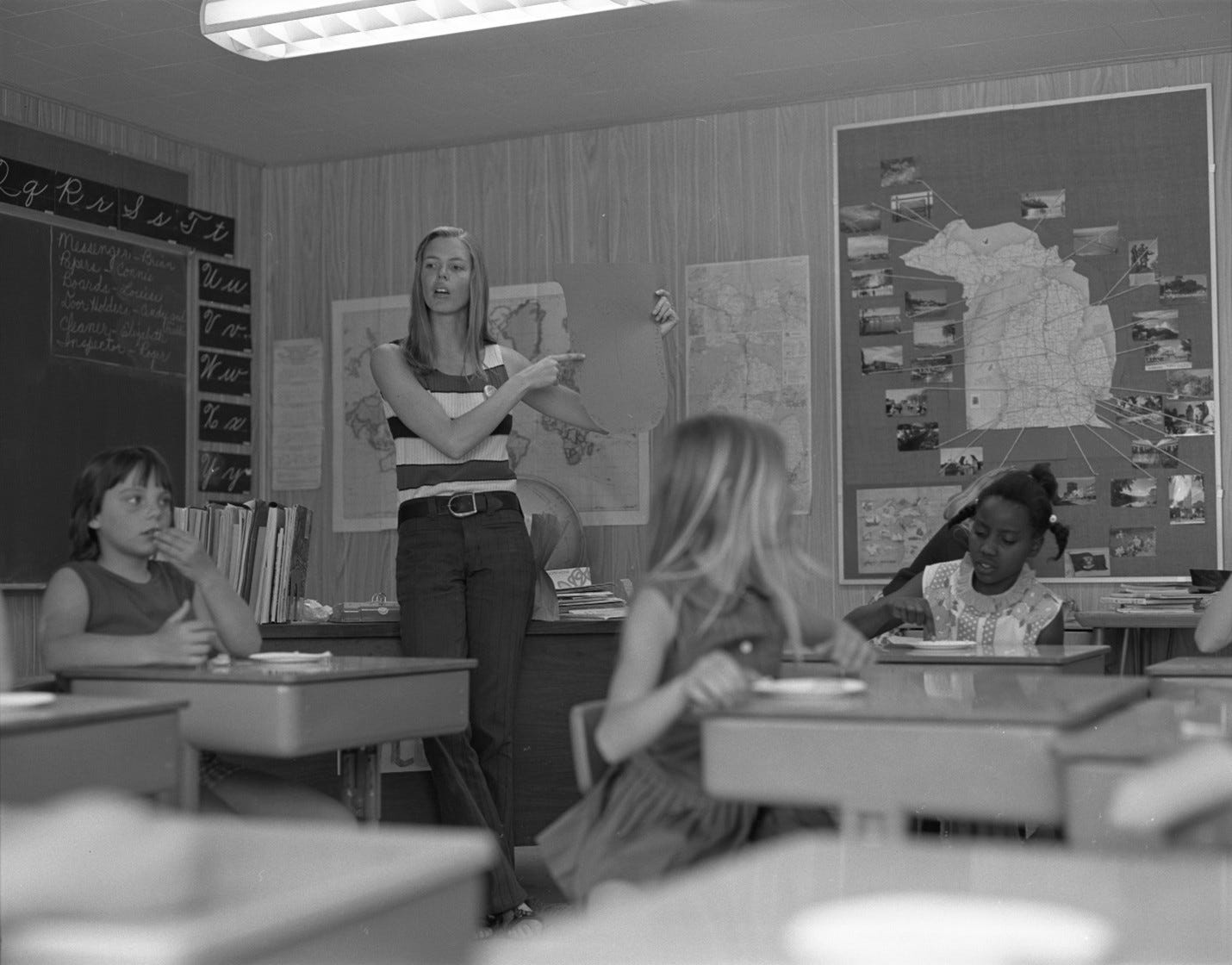
Another proposal was to stagger school times, such as moving some kindergarten classes to the afternoon. Yet another proposal was to add even more portables (see a Clinton portable below with a map of Michigan on the wall), though it was easier to add classrooms than to add shared facilities like libraries, cafeterias, and gyms.
Most Clinton parents were happy, therefore, when AAPS superintendent Bruce McPherson proposed building a second school within the Clinton School’s catchment area, basically splitting the district in two. The new school – Clinton II, for our purposes - would be ready in the Fall of 1972 – just 8 months away. The school board quickly obligated the funds for the new school and while details were scarce, the expectation was that kids north of I-94 would attend Clinton I and that kids to the south would attend Clinton II. Call this the “closest-school” plan.
Yet Superintendent McPherson soon threw a spanner in his own works when he announced that Clinton I would be “paired” with Clinton II. McPherson’s pairing plan had all kids attend Clinton I for grades K-2 and then switch en masse to Clinton II for grades 3-5. This would entail “safety busing” kids across I-94 depending on their grade and the side of I-94 that they lived on.
McPherson liked pairing because to do otherwise would leave “one school on the north side of the expressway with an enrollment of white upper-class students (and) another school south of the expressway with mostly black students.” This would entail “blatant segregation” and he was fully committed to “integration and diversity of the mass population for the benefits of the students and the community.” He would not be privy to the creation of a second Mason-Dixon line in Ann Arbor.
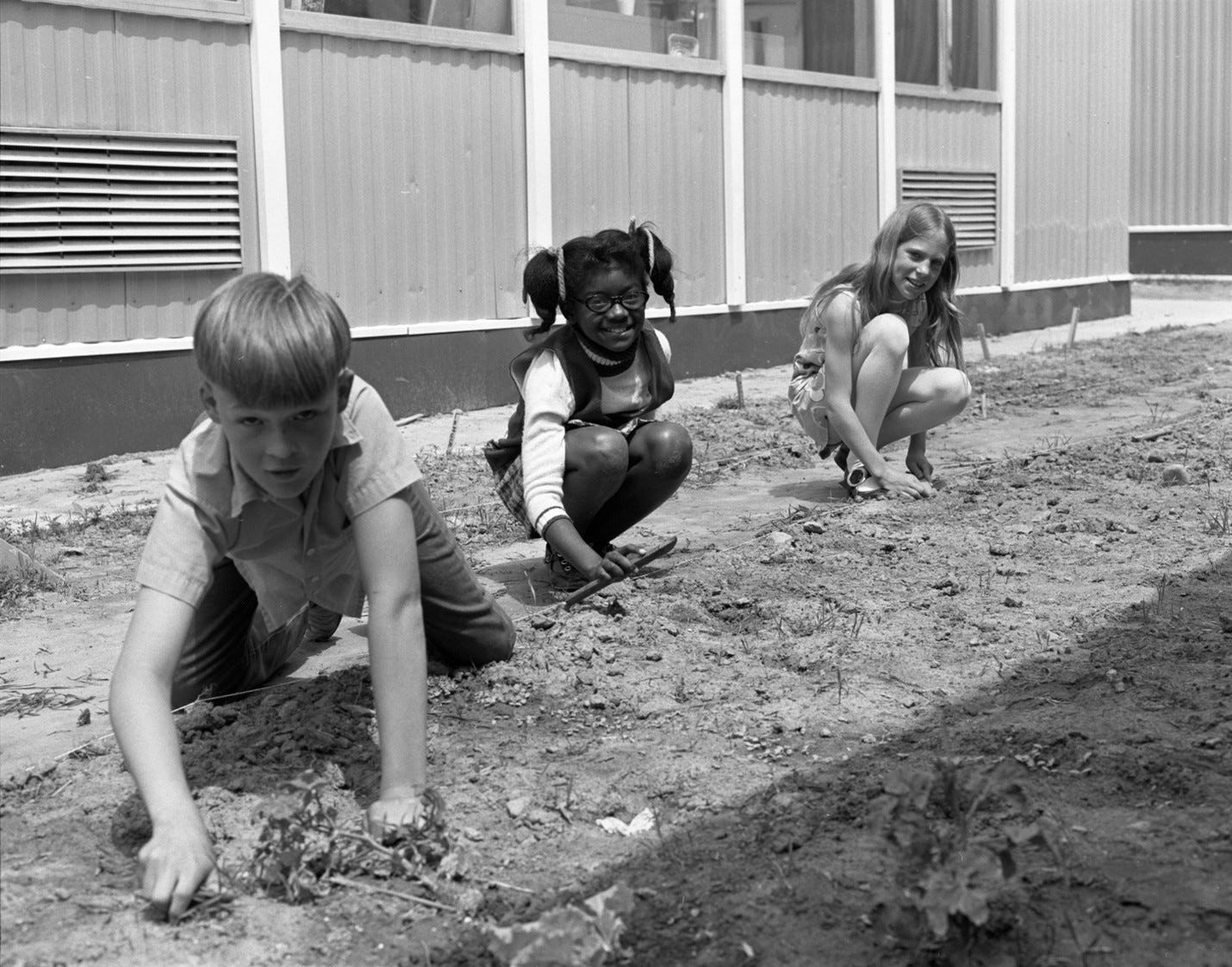
Most Clinton I parents - i.e., the richer, whiter parents – didn’t like the pairing plan. One mother complained that her kids would no longer come home for lunch, and other parents were vexed that busing would add an hour to the school day. (I note for the record that my own mother wanted me gone for more of the day, not less.) Other Clinton I parents worried Clinton II kids would be rougher and less well-disciplined.
Some heard these as acceptable concerns of loving parents, and indeed Dad wrote in a defense of the pairing plan that
It is all too easy to put down the (Clinton I) residents complaining of the pairing of Clinton School as racists or elitists. I know some of those people well enough to know better.
Yet others did think that Clinton I parents were bigots. Maria Palazzola, a 9th grader at Pioneer High, wrote in to say that she was “truly disgusted with what is so obviously bothering” the Clinton I parents. Indeed, at a heated school board meeting Dad said:
Speaking specifically to members in the audience who had spoken out harshly against pairing, what I hear you saying is we don’t want our nice kids messing with those dumb, hostile kids across the expressway.
Readers can make their own judgments.
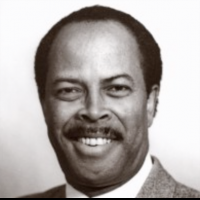
My father, Superintendent McPherson. and other pairing proponents like board member Henry Johnson (a U of M administrator pictured below) were motivated by interesting beliefs and assumptions. First, they believed that Brown v. Topeka Board of Education (1954) and the Civil Rights Act of 1964 imposed an obligation to actively desegregate whenever a new school was created. Subsequent court decisions would muddy this interpretation, but that’s what they believed.
Clinton I parents thought this a bit rich. Even under the closest-school plan, both Clintons would be majority white with significant minority representation. Why were these schools singled when other Ann Arbor schools, including my own Bader Elementary, were even more racially out of balance? Clinton I parents weren’t all that rich or upper-class, either, and they saw pairing as being foisted upon them by hypocritical University of Michigan parents who lived in richer, far whiter neighborhoods. Indeed, one of the angry Clinton I residents taught English at Eastern Michigan, the less snooty college located in nearby Ypsilanti.
My father and McPherson also believed that integrating elementary schools would reduce students’ racial prejudice later in life. My father wrote that “students coming from schools such as (an integrated) Clinton are less likely to become in social conflict in secondary schools.” There is still debate on the extent to which this is true, but pairing supporters thought that early school integration was the key to long-run interracial comity.
My father and McPherson also believed that integration would improve the academic performance of the lower-class kids without harming upper-class kids. Dad wrote that “the science presented to the Board” shows that “children who bring a lot of literacy to school share it without loss to themselves.” Given that, a failure to mix kids by socioeconomic class would lead the board to “be false to its most basic obligation, which is to maximize the attainment of basic skills.”
This benign view of the effects of integration on academic performance was widely held. Indeed, Pioneer High freshman Maria Palazzola wrote, speaking again to Clinton parents, that
if your children should happen to end up in a classroom housing children of (ahem) ‘different backgrounds,’ let me assure you that they will not be harmed in any way. In fact, if such turns out to be the case, consider it a blessing. You will if you truly have your children’s best interests in mind.
Some Clinton I parents accepted these arguments and wrote in the News that “we also feel that the educational benefits of this recommendation far outweigh any inconvenience for parents.”
Yet most Clinton I parents were very angry. Clinton I parent Linda Chessler wrote that
to overlook most of a community’s needs and feelings…to intimidate a healthy atmosphere of opinions from being expressed by using names as `bigot’ and `hypocrite’ to anyone of a different opinion (McPherson)I s perhaps the worst hypocrisy of all.
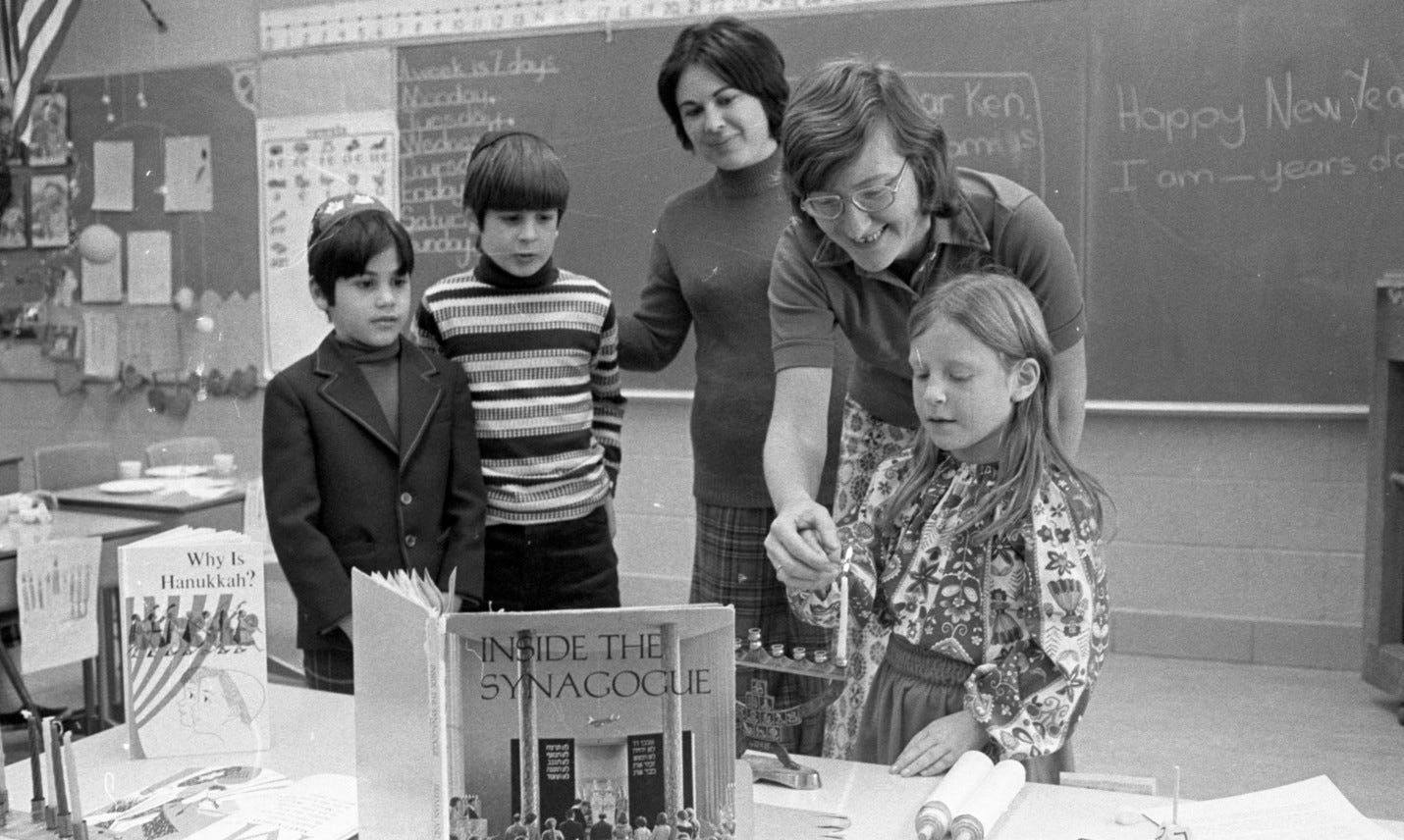
(You can see Chessler below, in the middle, at a 1973 Chanukah event at Clinton I). Clinton I parent Wendy Raeder - who later served on the school board - was “furious” that her children would be bused “to satisfy some dingbat’s perverted sense of social justice.” Another “furious” Clinton I parent wrote that it wasn’t fair to bus her kids “just to balance the scales somewhere.”
The board pushed on with Superintendent McPherson’s pairing plan despite the community unrest. My father tried to calm things when wrote in the News that
I express not only sympathy but gratitude (to the parents of Clinton I) and the hope that they will, in the end, find the pairing to be beneficial to their children, as I believe that it will be.
I still see that as a generous and sympathetic statement, but some Clinton I parents viewed it as condescension from a University of Michigan boffin whose children were not being bused.
They would have been even madder if they had known that my father was then arranging to take a visiting position at Columbia in the 1972-73 school year. His initial idea was that the family would stay back in Ann Arbor, but my mom insisted that we all go with him. In so doing, they seem to have not really considered putting their four school-age children in the public schools near our apartment that overlooked the Hudson River on 101st Street. No, we all went to private schools instead.
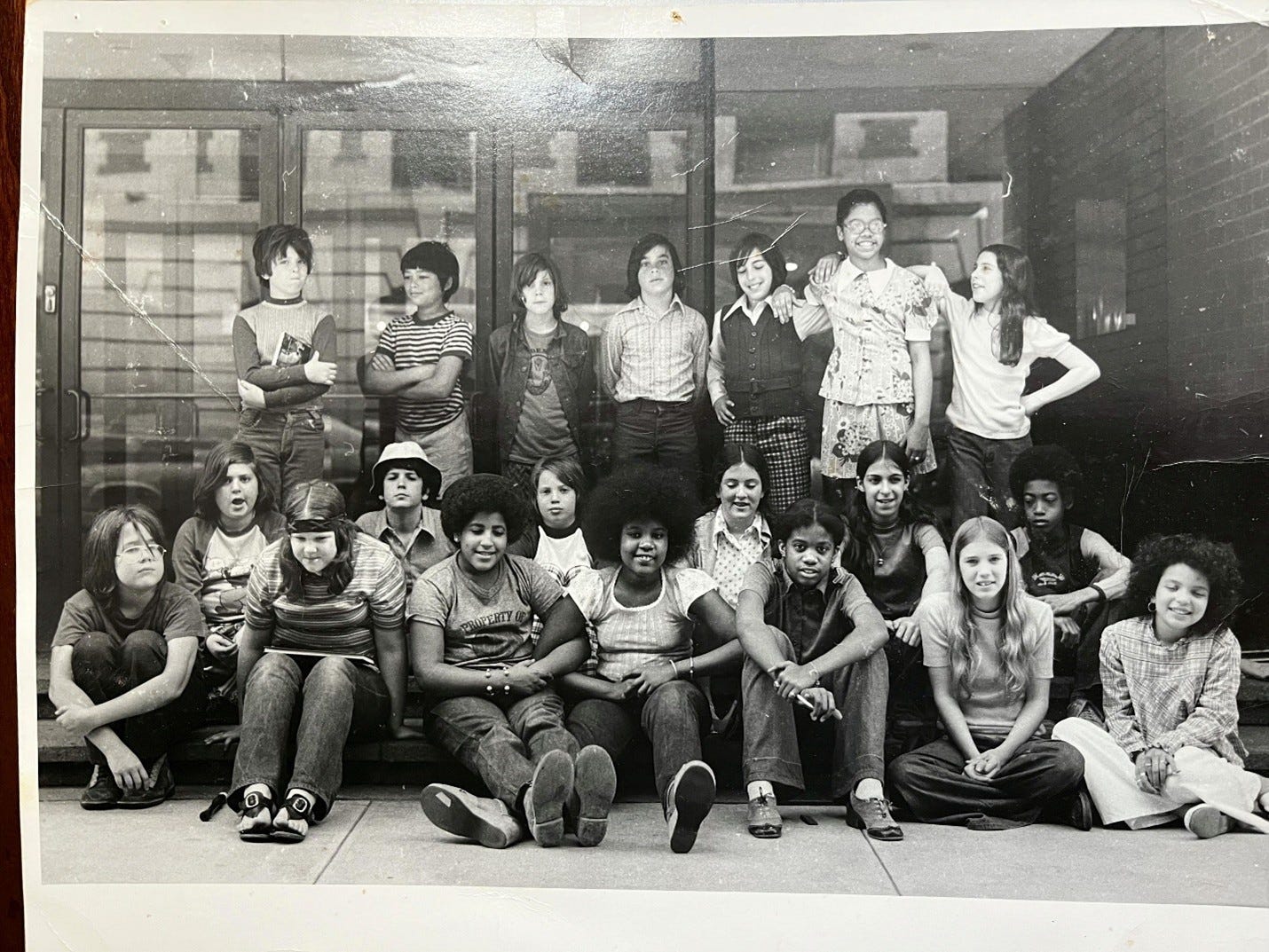
My older brother spent his senior year at The New School down in Greenwich Village. My older sister went to Dalton, the east side school that would soon hire Jeffrey Epstein as a math teacher (she hated it). And my little sister and I attended the Bank Street School on West 112th street, a very liberal school that would have fit right in with Ann Arbor’s counterculture. I loved Bank Street, my look in the class picture notwithstanding (I’m upper left).
I have to acknowledge here that my generous, civic-minded father really was a bit of a hypocrite in many of the same ways that Clinton I parent Linda Chessler described above. He really did demand that middle-class families submit to busing, to disruption, and to rubbing shoulders with the schoolchildren of the unwashed masses, even as he placed the children he loved in far cushier situations.
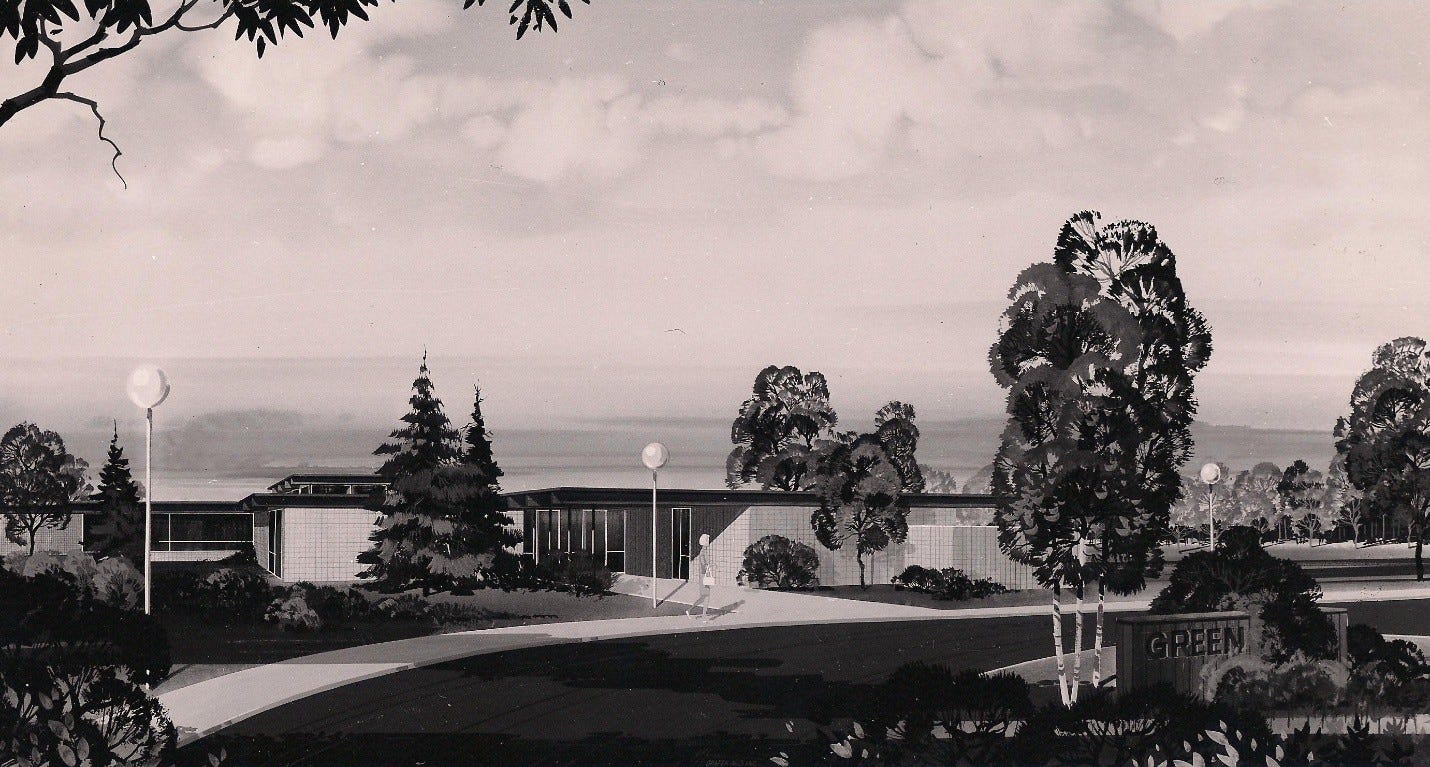
My father had a lot of company as private schools were popping up all over to teach the children of wealthy elites who were simultaneously demanding the economic and racial integration of the public schools. Ann Arbor’s Greenhills School (below), founded in 1968, was one of them. This did not go unnoticed by the unwashed masses, and so the Battle of the Clintons was just getting started.
I have to speak up for the New York City public school system. From kindergarten through high school, I attended and survived these schools very well. The one point about segregation I should make is that there were very few Catholics in these classes since they went to parochial schools in the neighborhood. We were all friends after school--playing stoop ball, potsie, and other NY sidewalk games in upper Manhattan (Inwood). Growing up in NY was an incredible experience.
“...Children who bring a lot of literacy to school share it without loss to themselves.” Beautifully concise and cogent.
This seems more of a tracking v. streaming, and socio-economic debate that got (unfairly) reframed as the (nonetheless important) civil rights debate going on at the time. Students who learn wiith professors' offspring will naturally be more advanced after the first years of school, have paid higher property tax, and generally are happy with the advantages that come with highly educated parents.
It's not easy to share thise advantages, as it is not easy to watch them from afar and not gave access to them.
But viewed from a societal perspective, mixing advantaged students with less so, brings a richer experience and has benefits later in the imagination, innovation and generosity of citizens.
That idea is missing in India and its absence directly impacts the economy, civil unity and quality of life here, as much as bad roads or corruption.
Long way of saying, important topic and fascinating essay, Will!